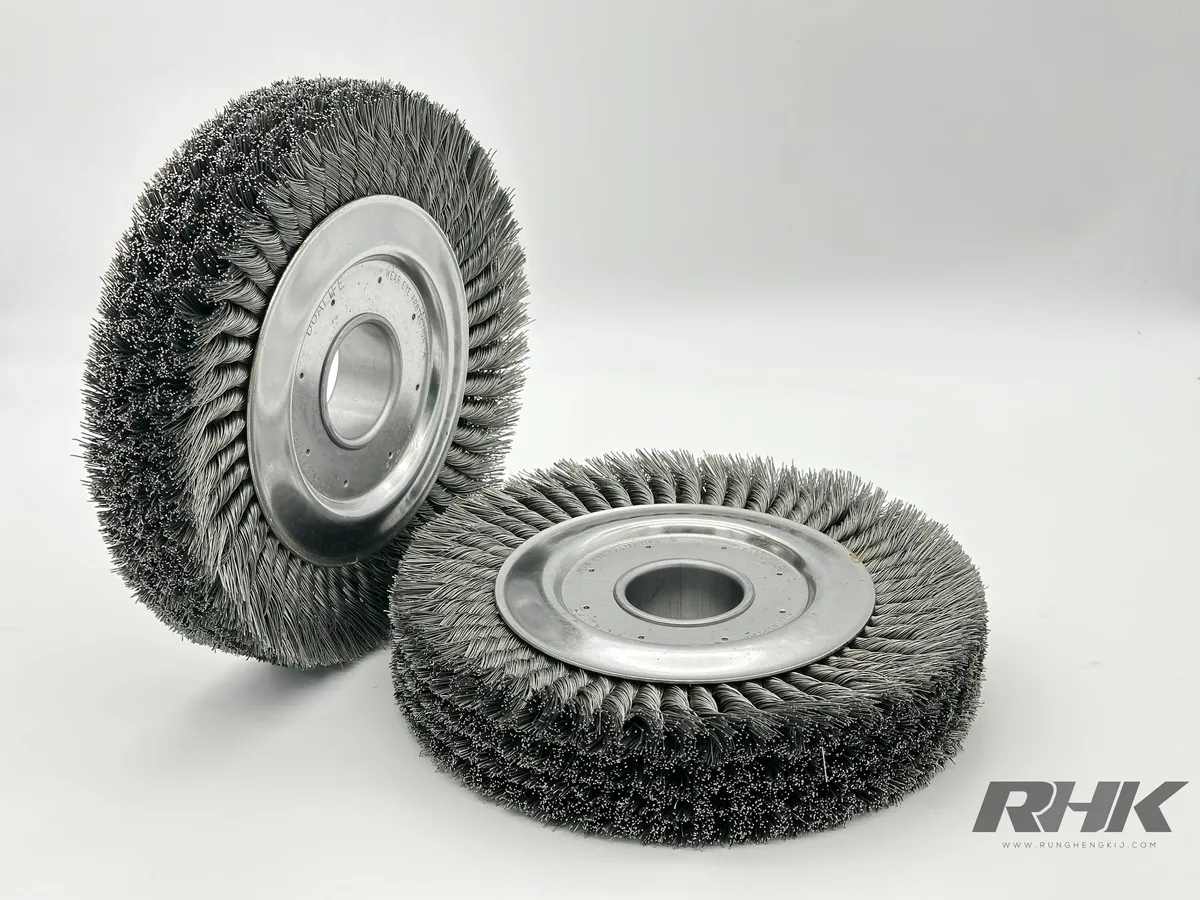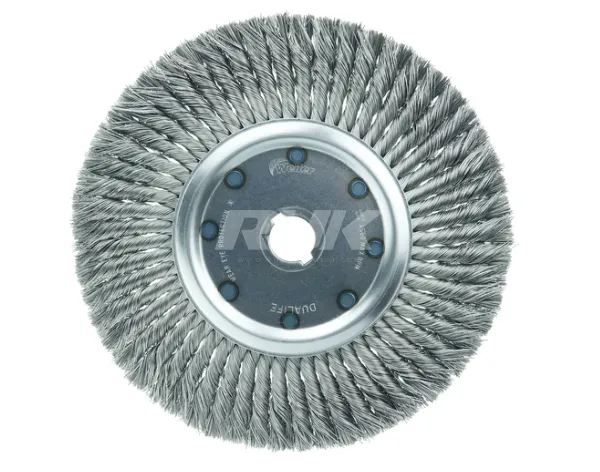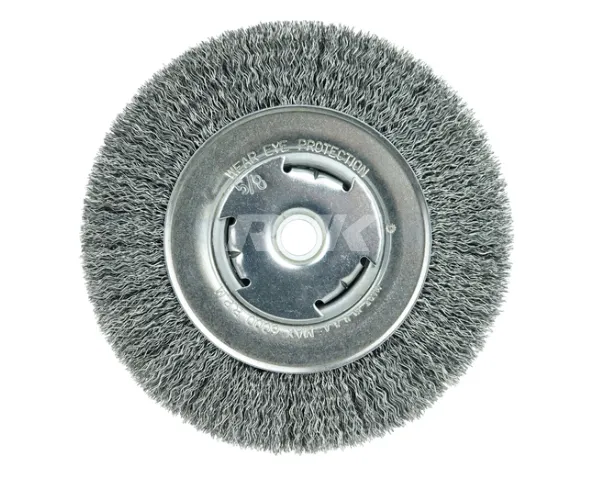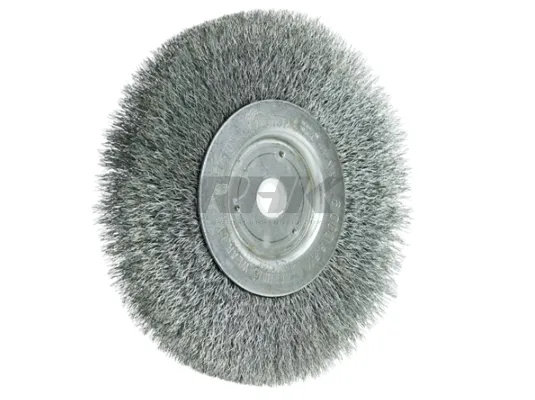
แปรงล้อลวด หรือ Wire Wheel Brush คือแปรงอุตสาหกรรมรูปทรงวงกลมที่ทำจากขนลวดโลหะโดยเฉพาะ ไม่ว่าจะเป็นลวดเหล็ก ลวดสแตนเลส หรือลวดทองเหลือง ยึดอยู่รอบขอบแผ่นฐานทรงกลม ออกแบบมาสำหรับงานขัดหนักที่ต้องการแรงขัดสูง เช่น ขจัดสนิม ลอกสี และทำความสะอาดพื้นผิวโลหะก่อนเชื่อมหรือเคลือบผิว
จุดเด่นของแปรงล้อลวดคือความแข็งแรงและความคงทนของขนลวด ทำให้สามารถขัดผิวที่มีคราบฝังแน่นได้อย่างมีประสิทธิภาพ เหมาะกับงานอุตสาหกรรมหนักที่ต้องการความรวดเร็วในการเตรียมพื้นผิว
1. แปรงล้อลวดเหล็ก (Steel Wire Wheel Brush)
2. แปรงล้อลวดสแตนเลส (Stainless Steel Wire Wheel Brush)
3. แปรงล้อลวดทองเหลือง (Brass Wire Wheel Brush)
1. แบบลวดถักเกลียว (Twist Knot Wire Wheel)
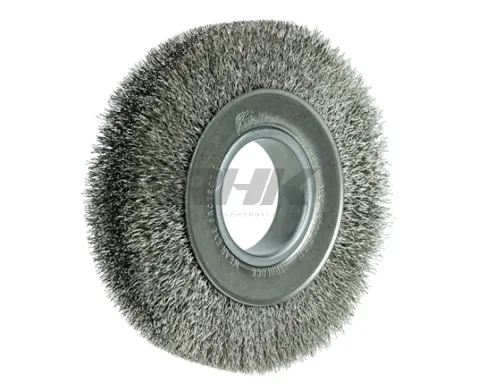
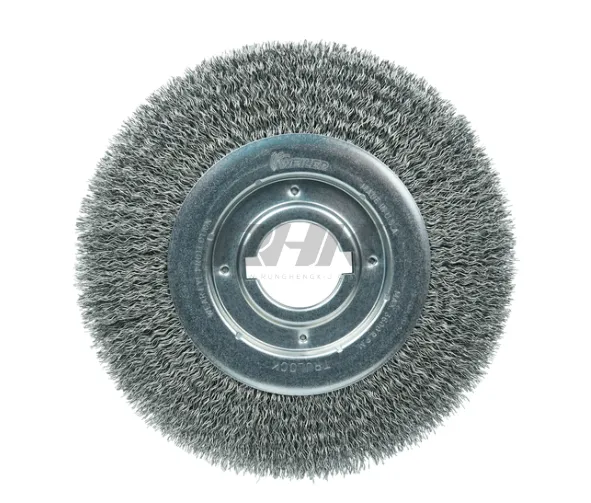
2. แบบลวดตรง (Crimped Wire Wheel)
| สเปค | คำอธิบาย |
|---|---|
| เส้นผ่าศูนย์กลาง (Diameter) | มีหลายขนาดตามรุ่นเครื่องเจียรหรือเครื่องขัด |
| ความหนาลวด (Wire Gauge) | ลวดหนา = แข็งแรงกว่า ลวดบาง = ยืดหยุ่นกว่า |
| รูยึดกลาง (Arbor Hole) | ต้องตรงกับแกนของเครื่องจักร |
| ความเร็วรอบสูงสุด (Max RPM) | ระบุบนแปรงทุกชิ้น ห้ามใช้งานเกินค่านี้ |
| ลักษณะการถักลวด | แบบถักเกลียวหรือแบบลวดตรง |
แปรงล้อลวดใช้งานได้หลากหลายในอุตสาหกรรม ดังนี้:
1. ดูวัสดุชิ้นงาน
2. ดูความเร็วรอบของเครื่องจักร ตรวจสอบค่า RPM ของเครื่องที่ใช้ แล้วเลือกแปรงที่รับ RPM สูงกว่าหรือเท่ากันเสมอ
3. ดูระดับความสกปรกของงาน คราบฝังแน่นมาก → เลือกแบบลวดถักเกลียว | งานทำความสะอาดทั่วไป → เลือกแบบลวดตรง
4. ดูขนาดรูยึดและเส้นผ่าศูนย์กลาง ต้องตรงกับสเปคของเครื่องเจียรหรือเครื่องขัดที่ใช้งานอยู่
บริษัท รุ่งเฮงกิจ จำกัด ผลิตและจำหน่ายแปรงล้อลวดคุณภาพสูงสำหรับอุตสาหกรรมทุกประเภท รับสั่งผลิตแปรงล้อลวดตามแบบ ระบุขนาด วัสดุลวด ความหนาลวด และรูยึดได้ตามต้องการ
📞 ติดต่อสอบถามและขอใบเสนอราคา: ติดต่อเรา
บทความนี้จัดทำโดยทีมงาน รุ่งเฮงกิจ ผู้เชี่ยวชาญด้านแปรงอุตสาหกรรมกว่า 30 ปี
Q: แปรงล้อลวดกับแปรงล้อกลมทั่วไปต่างกันอย่างไร? A: แปรงล้อลวดทำจากขนลวดโลหะโดยเฉพาะ เหมาะกับงานขัดหนักที่ต้องการแรงขัดสูง ส่วนแปรงล้อกลมทั่วไปอาจใช้ขนไนลอนหรือขนวัสดุอื่นที่เหมาะกับงานเบากว่า
Q: แปรงล้อลวดเหล็กใช้กับสแตนเลสได้ไหม? A: ไม่แนะนำ เพราะเศษลวดเหล็กอาจฝังตัวในผิวสแตนเลสและทำให้เกิดสนิมตามมา ควรใช้แปรงล้อลวดสแตนเลสแทน
Q: แปรงล้อลวดแบบถักเกลียวกับแบบลวดตรงต่างกันอย่างไร? A: แบบถักเกลียวให้แรงขัดสูงกว่า เหมาะกับงานหนักที่มีคราบฝังแน่น ส่วนแบบลวดตรงให้ผลลัพธ์นุ่มนวลกว่า เหมาะกับงานทำความสะอาดทั่วไป
A wire wheel brush is a circular industrial brush made specifically from metal wire bristles — whether steel, stainless steel, or brass — mounted around the edge of a circular base plate. It is designed for heavy-duty scrubbing tasks requiring high abrasive force, such as rust removal, paint stripping, and preparing metal surfaces before welding or coating.
The key advantage of a wire wheel brush is the strength and durability of its wire bristles, allowing it to effectively remove deeply embedded stains — making it ideal for heavy industrial work requiring rapid surface preparation.
1. Steel Wire Wheel Brush
2. Stainless Steel Wire Wheel Brush
3. Brass Wire Wheel Brush
1. Twist Knot Wire Wheel
2. Crimped Wire Wheel
| Specification | Details |
|---|---|
| Diameter | Available in multiple sizes depending on grinder or polishing machine model |
| Wire Gauge | Thicker wire = greater strength; thinner wire = more flexibility |
| Arbor Hole | Must align with the machine’s shaft |
| Max RPM | Marked on every brush — never exceed this rating |
| Wire Construction | Twist knot or crimped design |
Wire wheel brushes are used across many industries:
1. Consider the workpiece material
2. Match the machine’s RPM Check your machine’s RPM rating and always select a brush with an equal or higher Max RPM.
3. Consider the level of soiling Heavy embedded stains → Twist knot design | General cleaning → Crimped design
4. Match the arbor hole and diameter Must correspond to your grinder or polishing machine specifications.
RHK (Runghengkij) manufactures and supplies high-quality wire wheel brushes for all types of industrial applications. We offer custom-made wire wheel brushes with your specified diameter, wire material, wire gauge, and arbor hole size.
📞 Contact us for inquiries and quotations: Contact Us
This article is produced by the RHK team — industrial brush specialists with over 30 years of experience.
Q: What is the difference between a wire wheel brush and a standard wheel brush? A: A wire wheel brush is made specifically from metal wire bristles, designed for heavy-duty abrasive work. A standard wheel brush may use nylon or other bristle materials suited for lighter-duty tasks.
Q: Can a steel wire wheel brush be used on stainless steel? A: It is not recommended. Steel wire particles can embed in the stainless steel surface and cause rust contamination. Use a stainless steel wire wheel brush instead.
Q: What is the difference between twist knot and crimped wire wheel brushes? A: Twist knot brushes deliver higher abrasive force, ideal for heavy-duty work with severe stains. Crimped brushes deliver gentler, more evenly distributed abrasive action, suitable for general cleaning.