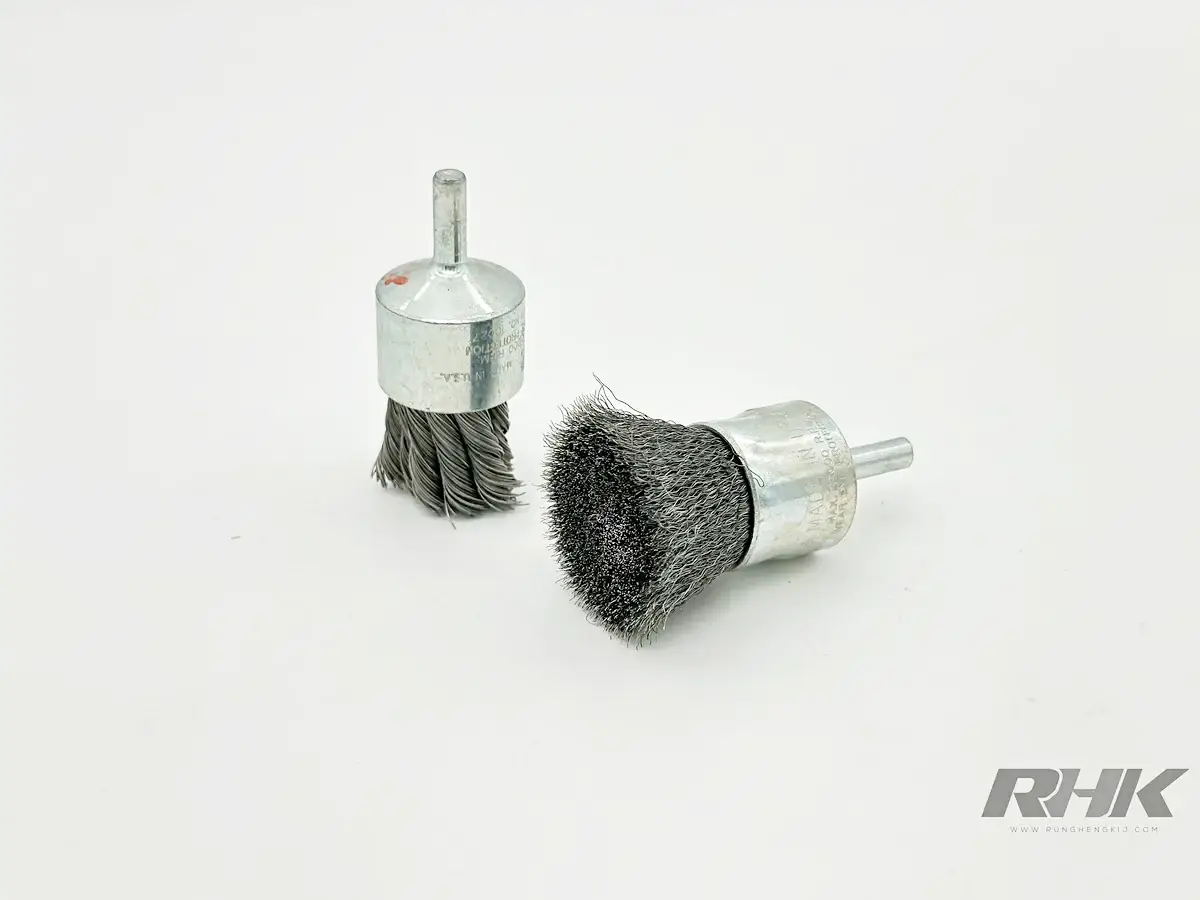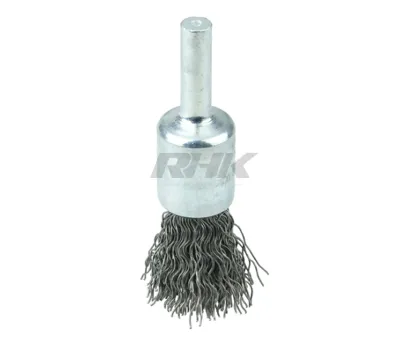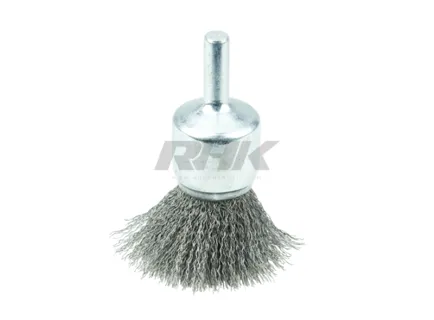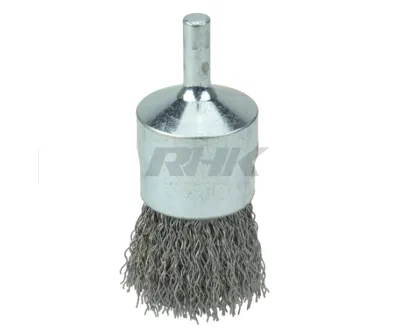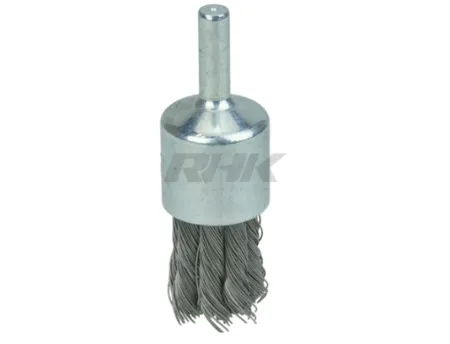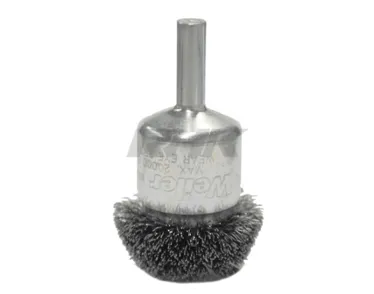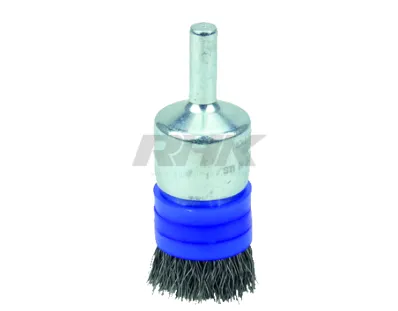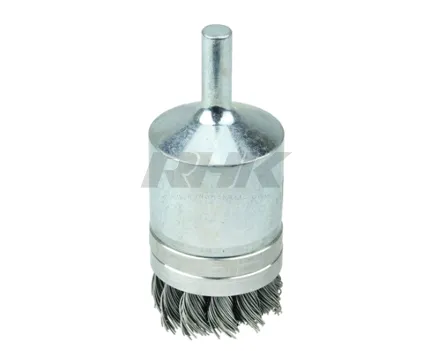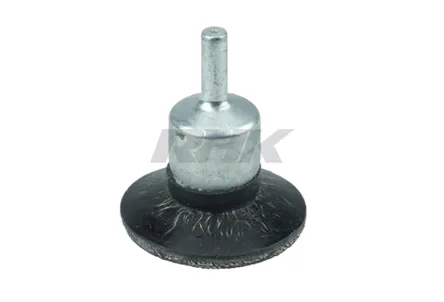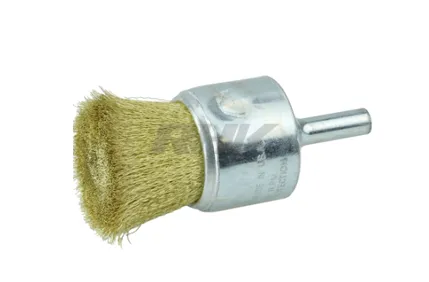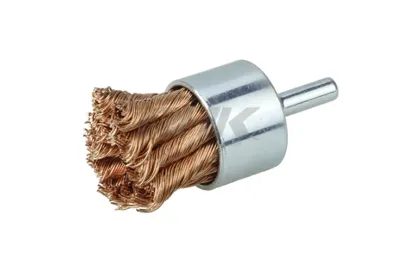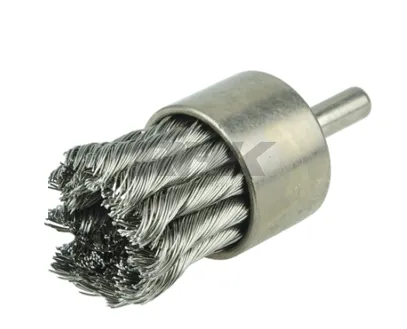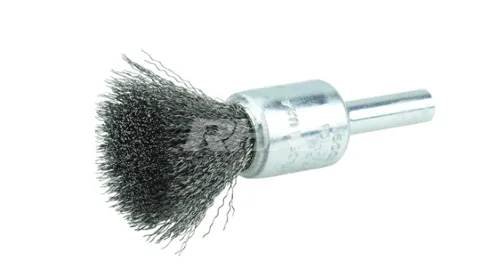
แปรงลวดพู่กัน หรือ Wire Pen Brush คือแปรงอุตสาหกรรมขนาดเล็กรูปทรงคล้ายพู่กันหรือดินสอ ทำจากขนลวดโลหะยึดอยู่บนแกนก้านทรงกระบอกขนาดเล็ก ออกแบบมาให้ติดตั้งเข้ากับเครื่องเจียรมือถือขนาดเล็กหรือดริลไฟฟ้าแบบด้ามจับ เหมาะสำหรับงานขัดหรือทำความสะอาดจุดเล็กๆ ที่ต้องการความละเอียดและเข้าถึงพื้นที่แคบ
จุดเด่นของแปรงลวดพู่กันคือขนาดกะทัดรัดและก้านยาวที่ช่วยให้เข้าถึงมุมอับหรือร่องแคบได้ง่าย เหมาะกับงานซ่อมบำรุงชิ้นส่วนขนาดเล็ก งานทำความสะอาดรอยเชื่อมในจุดที่เข้าถึงยาก และงานฝีมือที่ต้องการความแม่นยำสูง
1. แปรงลวดพู่กันลวดเหล็ก (Steel Wire Pen Brush)
2. แปรงลวดพู่กันลวดสแตนเลส (Stainless Steel Wire Pen Brush)
3. แปรงลวดพู่กันลวดทองเหลือง (Brass Wire Pen Brush)
1. แบบทรงกระบอก (Cylindrical End Brush)
2. แบบทรงถ้วยเล็ก (Miniature Cup Brush)
| สเปค | คำอธิบาย |
|---|---|
| เส้นผ่าศูนย์กลางหัวแปรง (Head Diameter) | มีขนาดเล็กตั้งแต่ไม่กี่มิลลิเมตรถึงประมาณ 25 mm |
| ขนาดก้านจับ (Shank Diameter) | มาตรฐานทั่วไป 3 mm หรือ 6 mm สำหรับดริลและเครื่องเจียรมือถือ |
| ความยาวก้าน (Shank Length) | มีผลต่อความสามารถในการเข้าถึงจุดลึก |
| ความหนาลวด (Wire Gauge) | ลวดหนา = แข็งแรงกว่า ลวดบาง = ยืดหยุ่นกว่า |
| ความเร็วรอบสูงสุด (Max RPM) | ระบุบนแปรงทุกชิ้น ห้ามใช้งานเกินค่านี้ |
แปรงลวดพู่กันใช้งานได้หลากหลายในอุตสาหกรรมและงานฝีมือ ดังนี้:
1. ดูวัสดุชิ้นงาน
2. ดูขนาดก้านจับให้ตรงกับเครื่องมือ ตรวจสอบว่าดริลหรือเครื่องเจียรมือถือรองรับก้านขนาด 3 mm หรือ 6 mm
3. ดูรูปทรงหัวแปรงตามลักษณะพื้นที่ทำงาน
4. ดูความเร็วรอบของเครื่องมือ ตรวจสอบค่า RPM ของเครื่องมือถือที่ใช้ แล้วเลือกแปรงที่รับ RPM สูงกว่าหรือเท่ากันเสมอ
บริษัท รุ่งเฮงกิจ จำกัด ผลิตและจำหน่ายแปรงลวดพู่กันคุณภาพสูงสำหรับงานอุตสาหกรรมและงานฝีมือทุกประเภท รับสั่งผลิตแปรงลวดพู่กันตามแบบ ระบุขนาดหัวแปรง ความยาวก้าน วัสดุลวด และขนาดก้านจับได้ตามต้องการ
📞 ติดต่อสอบถามและขอใบเสนอราคา: ติดต่อเรา
บทความนี้จัดทำโดยทีมงาน รุ่งเฮงกิจ ผู้เชี่ยวชาญด้านแปรงอุตสาหกรรมกว่า 30 ปี
Q: แปรงลวดพู่กันกับแปรงลวดถ้วยต่างกันอย่างไร? A: แปรงลวดพู่กันมีขนาดเล็กกว่ามาก ออกแบบมาสำหรับเข้าถึงจุดแคบหรือมุมอับด้วยเครื่องเจียรมือถือขนาดเล็ก ส่วนแปรงลวดถ้วยมีขนาดใหญ่กว่า เหมาะกับงานขัดพื้นผิวกว้าง
Q: แปรงลวดพู่กันใช้กับดริลไฟฟ้าทั่วไปได้ไหม? A: ได้ครับ หากก้านแปรงมีขนาดตรงกับหัวจับของดริล (โดยทั่วไป 3 mm หรือ 6 mm) ก็สามารถใช้งานร่วมกันได้
Q: แปรงลวดพู่กันเหมาะกับงานแบบไหนมากที่สุด? A: เหมาะกับงานที่ต้องการความละเอียดในจุดเล็กๆ เช่น ทำความสะอาดรอยเชื่อมในมุมอับ ขจัดสนิมในชิ้นส่วนขนาดเล็ก หรือทำความสะอาดรูเกลียวก่อนประกอบชิ้นงาน
A wire pen brush is a small, pen-shaped industrial brush made from metal wire bristles mounted onto a small cylindrical shaft. It is designed to attach to a mini handheld grinder or handheld electric drill, making it ideal for scrubbing or cleaning small, hard-to-reach areas requiring precision.
The key advantage of a wire pen brush is its compact size and elongated shank, allowing easy access to tight corners or narrow grooves. It is commonly used for maintenance on small components, cleaning weld seams in hard-to-reach spots, and precision craft work.
1. Steel Wire Pen Brush
2. Stainless Steel Wire Pen Brush
3. Brass Wire Pen Brush
1. Cylindrical End Brush
2. Miniature Cup Brush
| Specification | Details |
|---|---|
| Head Diameter | Small sizes ranging from a few millimeters up to approximately 25 mm |
| Shank Diameter | Standard sizes of 3 mm or 6 mm for drills and handheld grinders |
| Shank Length | Affects the ability to reach deep or recessed areas |
| Wire Gauge | Thicker wire = greater strength; thinner wire = more flexibility |
| Max RPM | Marked on every brush — never exceed this rating |
Wire pen brushes are used across many industries and craft applications:
1. Consider the workpiece material
2. Match the shank size to your tool Verify whether your drill or handheld grinder accepts a 3 mm or 6 mm shank.
3. Choose the brush head shape based on the work area
4. Match the tool’s RPM Check your handheld tool’s RPM rating and always select a brush with an equal or higher Max RPM.
RHK (Runghengkij) manufactures and supplies high-quality wire pen brushes for industrial and craft applications. We offer custom-made wire pen brushes with your specified head size, shank length, wire material, and shank diameter.
📞 Contact us for inquiries and quotations: Contact Us
This article is produced by the RHK team — industrial brush specialists with over 30 years of experience.
Q: What is the difference between a wire pen brush and a wire cup brush? A: A wire pen brush is much smaller, designed for accessing tight corners or narrow spaces with a mini handheld grinder. A wire cup brush is larger, suited for scrubbing wide surface areas.
Q: Can a wire pen brush be used with a standard electric drill? A: Yes, as long as the brush shank size matches your drill’s chuck size (typically 3 mm or 6 mm).
Q: What is a wire pen brush best used for? A: It is best suited for precision work in small areas, such as cleaning weld seams in tight corners, removing rust from small components, or cleaning threaded holes before assembly.