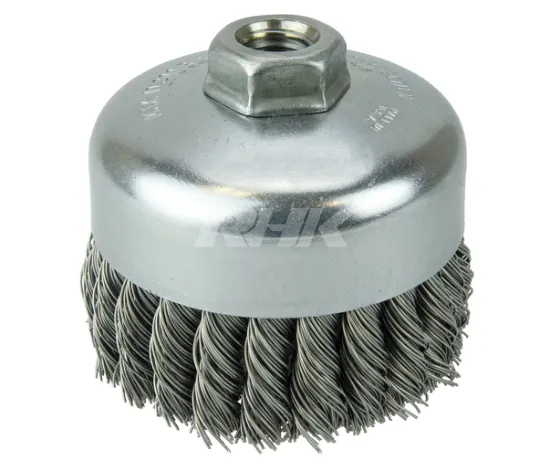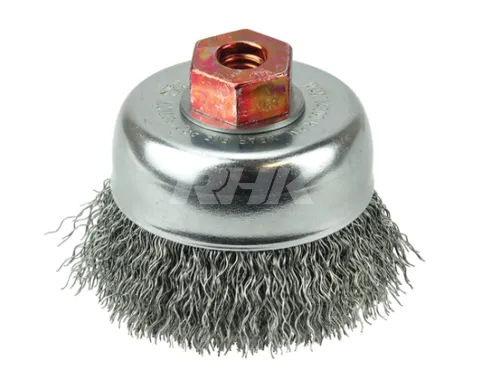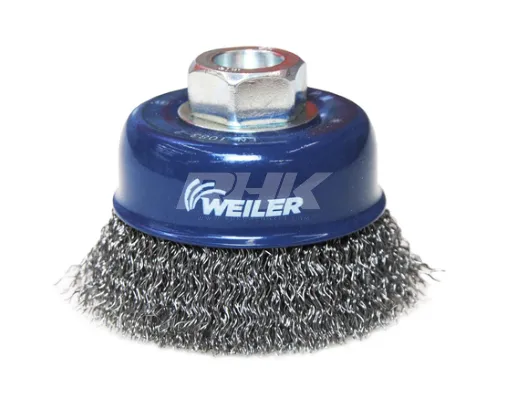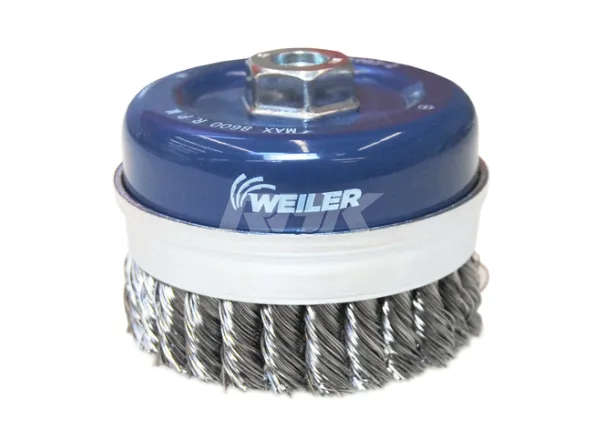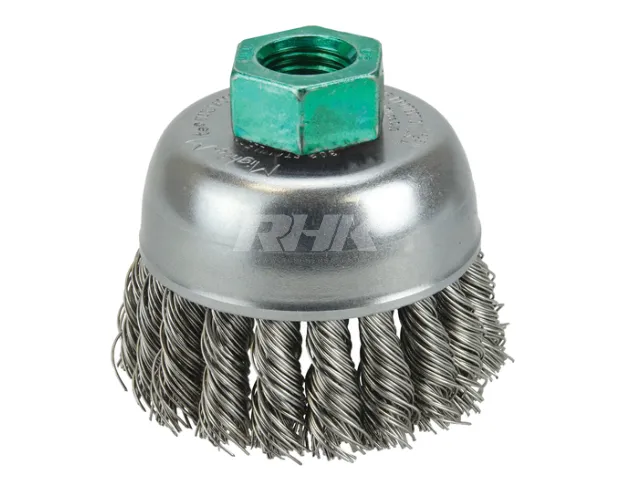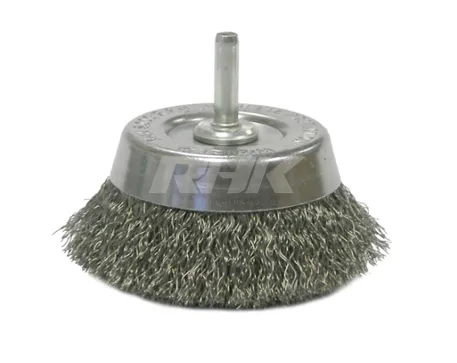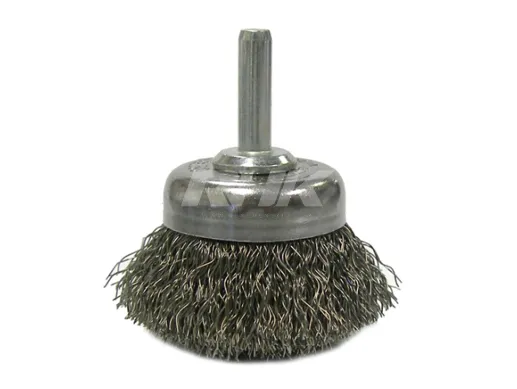
แปรงลวดถ้วย หรือ Wire Cup Brush คือแปรงอุตสาหกรรมรูปทรงถ้วยหรือกรวยตื้น ทำจากขนลวดโลหะยึดอยู่รอบขอบฐานทรงกรวย ออกแบบมาให้ติดตั้งเข้ากับเครื่องเจียรมือถือหรือเครื่องขัดแบบพกพา เหมาะสำหรับงานขัดพื้นผิวเรียบขนาดกว้างที่ต้องการแรงขัดสูงและควบคุมทิศทางได้ง่าย
จุดเด่นของแปรงลวดถ้วยคือรูปทรงกรวยที่ช่วยให้ขนลวดสัมผัสพื้นผิวได้เต็มพื้นที่มากกว่าแปรงล้อลวดทั่วไป ทำให้ขัดผิวได้รวดเร็วและสม่ำเสมอ นิยมใช้ในงานเตรียมพื้นผิวก่อนเชื่อมหรือเคลือบสี รวมถึงงานขัดสนิมบนพื้นผิวโลหะขนาดใหญ่
1. แปรงลวดถ้วยลวดเหล็ก (Steel Wire Cup Brush)
2. แปรงลวดถ้วยลวดสแตนเลส (Stainless Steel Wire Cup Brush)
3. แปรงลวดถ้วยลวดทองเหลือง (Brass Wire Cup Brush)
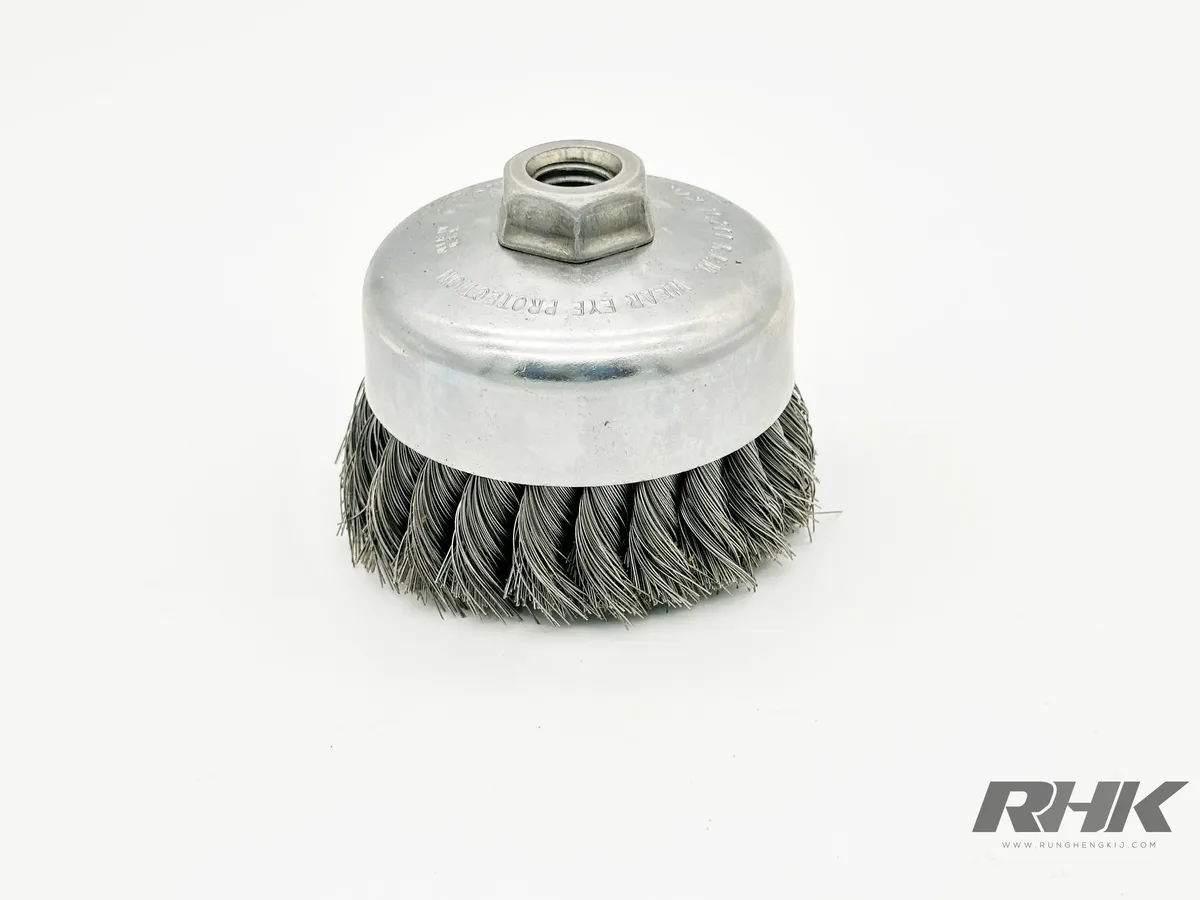
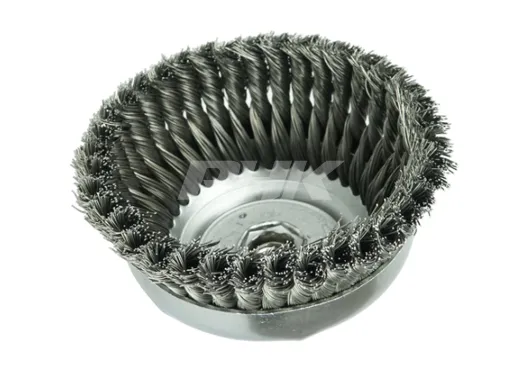
1. แบบลวดถักเกลียว (Twist Knot Wire Cup)
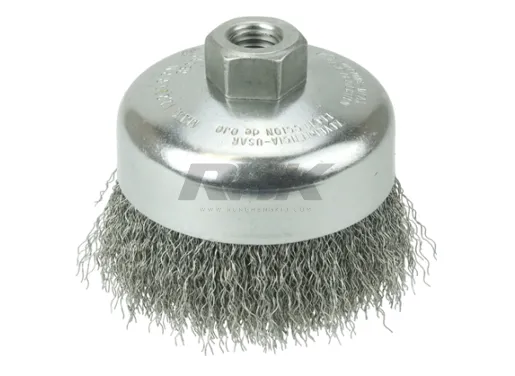
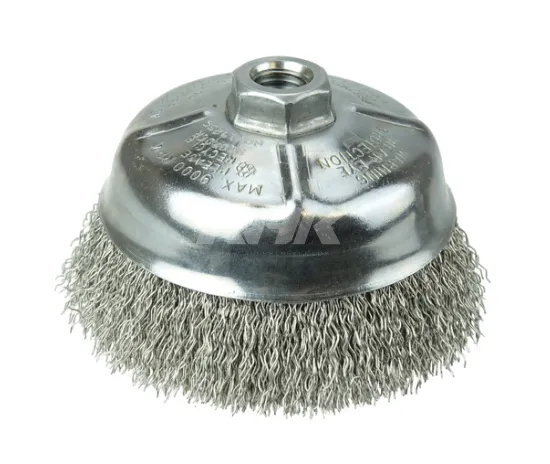
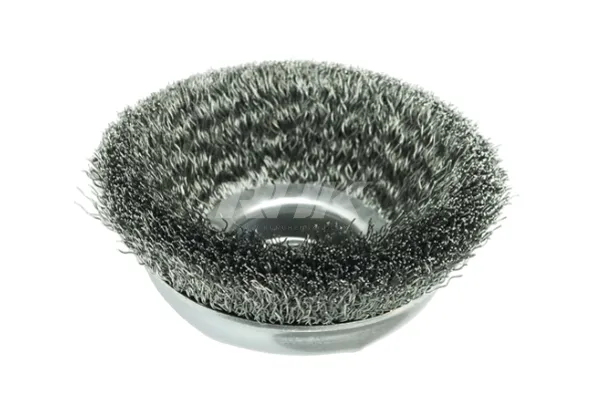
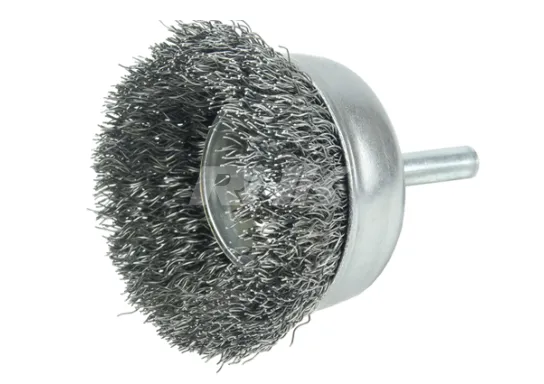
2. แบบลวดหยิก (Crimped Wire Cup)
| สเปค | คำอธิบาย |
|---|---|
| เส้นผ่าศูนย์กลาง (Diameter) | มีหลายขนาดตามรุ่นเครื่องเจียรมือถือ |
| ความหนาลวด (Wire Gauge) | ลวดหนา = แข็งแรงกว่า ลวดบาง = ยืดหยุ่นกว่า |
| รูยึดกลาง (Arbor Hole/Thread) | มีทั้งแบบรูกลมและแบบเกลียวสำหรับเครื่องเจียรมือถือ |
| ความเร็วรอบสูงสุด (Max RPM) | ระบุบนแปรงทุกชิ้น ห้ามใช้งานเกินค่านี้ |
| ความลึกของถ้วย (Cup Depth) | มีผลต่อพื้นที่สัมผัสและมุมการขัด |
แปรงลวดถ้วยใช้งานได้หลากหลายในอุตสาหกรรม ดังนี้:
1. ดูวัสดุชิ้นงาน
2. ดูความเร็วรอบของเครื่องเจียร ตรวจสอบค่า RPM ของเครื่องมือถือที่ใช้ แล้วเลือกแปรงที่รับ RPM สูงกว่าหรือเท่ากันเสมอ
3. ดูระบบยึดของเครื่องมือ ตรวจสอบว่าเครื่องเจียรใช้ระบบรูยึดแบบใด (รูกลมหรือเกลียว) เพื่อเลือกแปรงให้ตรงรุ่น
4. ดูระดับความสกปรกของงาน คราบฝังแน่นมาก → เลือกแบบลวดถักเกลียว | งานทำความสะอาดทั่วไป → เลือกแบบลวดหยิก
บริษัท รุ่งเฮงกิจ จำกัด ผลิตและจำหน่ายแปรงลวดถ้วยคุณภาพสูงสำหรับอุตสาหกรรมทุกประเภท รับสั่งผลิตแปรงลวดถ้วยตามแบบ ระบุขนาด วัสดุลวด ความหนาลวด และรูยึดได้ตามต้องการ
📞 ติดต่อสอบถามและขอใบเสนอราคา: ติดต่อเรา
บทความนี้จัดทำโดยทีมงาน รุ่งเฮงกิจ ผู้เชี่ยวชาญด้านแปรงอุตสาหกรรมกว่า 30 ปี
Q: แปรงลวดถ้วยกับแปรงล้อลวดต่างกันอย่างไร? A: แปรงลวดถ้วยมีรูปทรงกรวยตื้นที่ช่วยให้ขนลวดสัมผัสพื้นผิวได้เต็มพื้นที่มากกว่า เหมาะกับงานขัดพื้นผิวกว้างด้วยเครื่องเจียรมือถือ ส่วนแปรงล้อลวดมีรูปทรงแบนกว่า เหมาะกับงานที่ติดตั้งกับเครื่องขัดแบบตั้งโต๊ะ
Q: แปรงลวดถ้วยลวดเหล็กใช้กับสแตนเลสได้ไหม? A: ไม่แนะนำ เพราะเศษลวดเหล็กอาจฝังตัวในผิวสแตนเลสและทำให้เกิดสนิมตามมา ควรใช้แปรงลวดถ้วยลวดสแตนเลสแทน
Q: แปรงลวดถ้วยแบบถักเกลียวกับแบบลวดหยิกต่างกันอย่างไร? A: แบบถักเกลียวให้แรงขัดสูงกว่า เหมาะกับงานหนักที่มีคราบฝังแน่น ส่วนแบบลวดหยิกให้ผลลัพธ์นุ่มนวลกว่า เหมาะกับงานทำความสะอาดทั่วไป
A wire cup brush is an industrial brush shaped like a shallow cup or cone, made from metal wire bristles mounted around the edge of a conical base. It is designed to attach to handheld grinders or portable polishing tools, making it ideal for scrubbing wide flat surfaces where high abrasive force and easy directional control are needed.
The key advantage of a wire cup brush is its conical shape, which allows the wire bristles to make fuller surface contact compared to a standard wire wheel brush — resulting in faster, more even scrubbing. It is commonly used for surface preparation before welding or coating, as well as rust removal on large metal surfaces.
1. Steel Wire Cup Brush
2. Stainless Steel Wire Cup Brush
3. Brass Wire Cup Brush
1. Twist Knot Wire Cup
2. Crimped Wire Cup
| Specification | Details |
|---|---|
| Diameter | Available in multiple sizes depending on the handheld grinder model |
| Wire Gauge | Thicker wire = greater strength; thinner wire = more flexibility |
| Arbor Hole/Thread | Available in round-hole or threaded mount for handheld grinders |
| Max RPM | Marked on every brush — never exceed this rating |
| Cup Depth | Affects surface contact area and working angle |
Wire cup brushes are used across many industries:
1. Consider the workpiece material
2. Match the grinder’s RPM Check your handheld grinder’s RPM rating and always select a brush with an equal or higher Max RPM.
3. Check the mounting system Verify whether your grinder uses a round-hole or threaded mount to select the correct brush type.
4. Consider the level of soiling Heavy embedded stains → Twist knot design | General cleaning → Crimped design
RHK (Runghengkij) manufactures and supplies high-quality wire cup brushes for all types of industrial applications. We offer custom-made wire cup brushes with your specified diameter, wire material, wire gauge, and mounting type.
📞 Contact us for inquiries and quotations: Contact Us
This article is produced by the RHK team — industrial brush specialists with over 30 years of experience.
Q: What is the difference between a wire cup brush and a wire wheel brush? A: A wire cup brush has a shallow conical shape that allows fuller surface contact, ideal for wide-surface scrubbing with handheld grinders. A wire wheel brush has a flatter profile, typically used with bench-mounted grinding machines.
Q: Can a steel wire cup brush be used on stainless steel? A: It is not recommended. Steel wire particles can embed in the stainless steel surface and cause rust contamination. Use a stainless steel wire cup brush instead.
Q: What is the difference between twist knot and crimped wire cup brushes? A: Twist knot brushes deliver higher abrasive force, ideal for heavy-duty work with severe stains. Crimped brushes deliver gentler, more evenly distributed abrasive action, suitable for general cleaning.